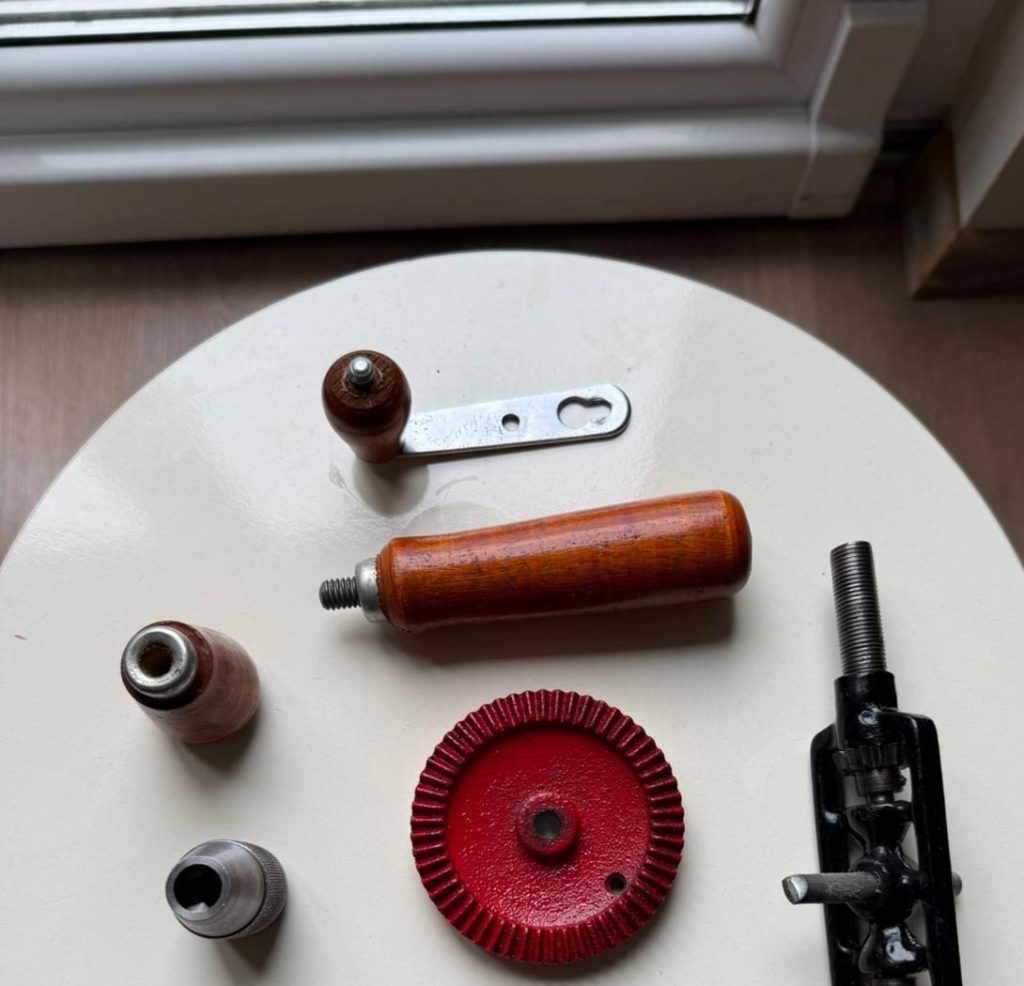
Need and Emergence
Throughout human history, there has been a need to join, fasten and shape materials.
Especially in areas such as building wooden structures, manufacturing household
goods, and producing ships and vehicles, there has been a need to drill holes. These
requirements led to the development of simple drilling tools and, over time, laid the
groundwork for the invention of the hand drill.
Functions
20th century: The widespread use of electric drills made their operation easier
and faster.
Patent and Development
A major turning point in the development of the modern electric hand drill was the
production of the first portable electric drill in 1895 by the German inventor Wilhelm
Emil Fein. Fein’s company was a pioneer in this field and continues to manufacture
professional hand tools today. Various companies have developed the technology,
leading to the lightweight, powerful, and cordless drills used nowadays.
Drilling holes: This is the main function of the hand drill, and holes of different
diameters can be made using various drill bits.
Screwing/unscrewing: Electric models also serve as screwdrivers.
Sanding and polishing: Surface finishing can be carried out using special
attachments.
Wide range of uses: It is used in many areas such as construction, carpentry,
repairs, and hobby projects.
History
Ancient times: The earliest drilling tools were bow drills, in which rotation was
achieved by a string and bow mechanism.
Middle Ages: More advanced mechanical hand drills, such as crank-operated
models, began to be used.
19th century: With the Industrial Revolution, more durable and efficient drills
were produced.
 Yeditepe Üniversitesi Me 182